Tuesday, November 29, 2011

Ian's Lime Liqueur Recipe

I firmly believe that an essential part of a writer's education is the creation of at least one drink recipe. So here, in celebration of the magnificent life of my lime tree, and mourning for its sudden, tragic death last week, is the recipe for my glorious lime liqueur.

1. Take about 30 FRESHLY PICKED limes when they're just ripe (ie, before the skin has started to yellow) and at their most aromatic. If they're not aromatic (or worse, they're supermarket limes) it doesn't work well. Test them by scratching the skin with a fingernail and sniffing. If they don't smell wonderful, don't bother – this is an all or nothing recipe.

2. Rinse the limes and remove any blemishes. With a potato peeler, carefully shave the green zest off, trying to avoid the white pith (it will make the liqueur bitter).

3. Put the zest in a large jar with about 250 g of sugar (more or less according to how sweet you like the liqueur).

4. Pour in a litre of good quality vodka, cap and shake until sugar is dissolved.

5. You can give the liqueur a bit more colour and fragrance by adding a few freshly picked lime leaves to the jar, if the leaves are really aromatic.

6. Cap the jar and leave in a cool dry place for a minimum of six weeks (3 months is better; longer than that doesn't make any difference).

6. Strain off the zest, bottle the pale green-gold liqueur and allow it to age for a couple of months, or longer. It lasts for years but is best drunk within a year or two. 

7. Before use, put the bottle in the freezer for several hours (it won't freeze due to the alcohol content). Drink ice cold, preferably from a chilled brandy balloon, in good company. Or listening to Hayley Westenra sing Amazing Grace, http://www.youtube.com/watch?v=BOrlCYp8TgU.

Theoretically this should work for other citrus fruits but I haven't had nearly as much success with oranges or lemons – I think because the oils in the peel weren't strong or fragrant enough. I'm going to try it with Seville oranges, when my tree is big enough.


Monday, November 28, 2011

Josephine Pennicott on Obstacles and Inspirations

Josephine Pennicott is a multi-award winning crime writer who has won the Scarlet Stiletto and (twice) the wonderfully named Kerry Greenwood Domestic Malice Prize. Jo has also written a dark fantasy trilogy, Circle of Nine. Today she reflects on writing obstacles and inspirations.


Thank you Ian, for inviting me to submit to your Blog. Those of us lucky enough to know Ian personally, know that he’s a gentleman who is incredibly generous with his support for other writers. Being part of an online writing community of fellow Selwa Anthony authors, I’ve read and gleaned a lot from Ian’s experience and wisdom over the years. So, of course I couldn’t refuse his invitation to be a part of his online project to help others.

My first novels were Dark Fantasy, published by Simon and Schuster (Earthlight imprint) - Circle of Nine (2001),Bride of the Stone (2002) and A Fire in the Shell (2004). They were the result of years studying painting at the College of Fine Arts in Sydney. They evolved from my own artwork, my interest in Surrealism, fairy tales, mythology and comparative religions, in particular Paganism. Circle of Nine was selected by Terri Windling and Ellen Datlow as one of the top ten debut books for their prestigious 2001 anthology, The Year’s Best Fantasy and Horror. They will soon be republished by Pan Macmillan as e-books.

Afterwards I spent three years – a very difficult time with all sorts of obstacles in the way of my writing - working on what I shall jokingly refer to as my ‘masterpiece.’ You know when you read authors saying they wrote a list of all the things they loved, put all those elements in their book, and it became a bestseller? Well, that’s what I was after! I began writing a historical, supernatural murder mystery called The Witches of Paris. I submitted the proposal to Selwa, who was very keen. Sophia Coppola was rumoured to be directing a movie based on Marie Antoinette; my book was set in a similar location and so it seemed like a timely idea.

But in 2007, when The Witches of Paris was still not quite done, I went on holiday with my family to Stanley on the North-West Coast of Tasmania and fell in love with a white house by the sea. A house that became incredibly important to my writing career. It gave me an idea for a new book, Poet’s Cottage, which Selwa encouraged me to start while I was waiting for an editor’s report on The Witches Of Paris.

The more I worked on Poet’s Cottage, the more the characters came to me. I had been to India in my early twenties and stayed at a well-known spiritual Guru’s ashram who had a saying, ‘Take one step towards me and I’ll take a thousand towards you.’ This book was exactly like that. My characters literally dragged me into the story. They were waiting for me every morning and the process became very exciting.

I forgot my previous project for the time being as I began to lose myself in the mystery of who killed Pearl Tatlow, bohemian children’s writer, in her dark and eerie cellar on a foggy day in Pencubitt, Tasmania in July 1936. Was she really murdered by ‘the Tasmanian devil that Mummy kept in the cellar to threaten us with when she was writing?’ as her daughter Thomasina, who witnessed the murder, claimed. Or, did something far more sinister cross the threshold of Poet’s Cottage? A stranger to the town, as the local people kept insisting – or someone Pearl knew and trusted?

As I mentioned, I was on holiday with my family when I first spotted the house that ignited the spark that became the book Poet’s Cottage.

In my Sydney life, I live with my daughter and my writer husband, David Levell, in a small, historic brick house in the inner-west. It’s like a tiny doll’s house and my husband is used to me falling in love with houses on all my trips. I’m a very proud fifth generation Tasmanian - and often homesick for my home state.

This particular house ticked all my boxes – it was a white Georgian-style home that looked like something the Bronte sisters would have lived in. It overlooked the sea, in a picturesque, Tasmanian sea-fishing village. A village that was a combination of wild gothic, isolated coastline contrasted with a very Cornish looking, cosy village that could have come straight from an Enid Blyton or Daphne du Maurier novel!

I felt that this house had a story to tell me. There didn’t appear to be anybody living there and so my imagination was free to conjure up a myriad of scenarios. I spent a lot of time standing outside the gates, listening for the secrets and stories that I felt sure the house was trying to whisper to me.

There was a friendly gentleman who said hello to me in the street every day. On one of our meetings, I confided I’d fallen in love with the house, and he beamed, ‘That’s Poet’s Cottage! And I’m the poet who used to live there!’ This friendly local was Lin Eldridge – when he discovered I was a writer - he introduced me to his 90-something year old wife, whose name is Marguerite Eldridge. Marguerite and Lin live in Gull Cottage; my Birdie Pinkerton lives in Seagull Cottage in the novel. I had no idea when first meeting this charming, pretty and twinkly eyed lady that she was actually quite a well-known identity in Tasmania. Marguerite, who has never left her fishing village (and I can easily understand why) has self-published several books on life in Stanley. She has been instrumental in her town for starting creative ventures. In January 2011, she was awarded an Australia Day Award, for her service to the creative arts and her community.

They were a most welcoming couple, just as Birdie does in Poet’s Cottage, Marguerite urged me to ‘help yourself to my Daphne’ and they tolerated with good spirits my small daughter running amuck in Gull Cottage. Marguerite helped to inspire my character of Birdie Pinkerton - as did another elderly lady that I knew and visited in my high school years in Tasmania. But Birdie Pinkerton is not Marguerite - despite sharing several things in common.

Over the years I was always fascinated by the story of Enid Blyton’s two daughters, Gillian and Imogen, having opposing views of their mother. I remember one story in the UK Telegraph, Was Enid Blyton the Mother from Hell? I’ve seen in my own family how different members could all have totally variant views of an incident- and how sometimes it was impossible to fathom what was truth.

I’m also addicted to the UK TV show Midsomer Murders, with its surreal but quite realistic juxtaposition of pretty English villages and murder most foul. Daphne du Maurier and Agatha Christie are both writers I love. I’ve won quite a few awards over the years for my crime writing short stories, which were always very dark. I love reading cosy, English-style mysteries and I wanted to set myself the challenge of writing an English style mystery but with an Australian setting. All these elements came together at Stanley. Tasmania was a perfect place to set the book as it’s so English looking!

I used elements of two Tasmanian towns for my imaginary town of Pencubitt for Poet’s Cottage, Stanley in the North-West and also Oatlands, which is the very pretty midlands Georgian village where I spent my high school years. My early years were spent in Papua New Guinea. Generations of Pennicotts have settled in Oatlands and the name seems to belong to the town and area.

It was a joy to escape into my imaginary fishing village of Pencubitt every day from my garden writing shed in Sydney with planes flying overhead and heavy traffic outside the front door of our brick house. I based the character of Sadie (in the present day thread of the book) and her daughter, Betty on a lot of mothers I saw around me in Sydney’s inner-west. A majority were older mothers and trying to parent in a different way to their mother’s generation. They weren’t trying to be friends so much with their children but there was a difference in the dynamic that I was trying to capture. Sadie also helped to partially satisfy my own longing for a sea-change.

Pearl Tatlow in the 30s thread evolved from years of watching crime dramas set in the 1930s. And also a little of Enid Blyton and Jerry Hall, the Texan model went into my boho Pearl. I once saw Jerry Hall strut her stuff down a Sydney street and never forgot the impact her beauty and sassy attitude had on the gawping crowd of normally too-cool-for-school city folk.

Birdie Pinkerton was inspired by the two older ladies mentioned above. She was always very strong and quite stern with me when I wasn’t capturing some aspect of her character.

Maxwell was inspired by a gentlemanly, kind and caring Uncle of mine. I always enjoyed Maxwell’s sweet and considerate manners when I was working.

Thomasina just came striding in to the writing shed, with her beanie on her head, filled with a terrible memory and some really fun scenes for me to write for her. She was always strong, always unpredictable and very touching to connect with. I grew to care for all my characters very deeply over the three years it took to writePoet’s Cottage.

Looking back, I’m thrilled with how things worked out. The Witches of Paris was a love letter to France and I still hope to see it published one day. Poet’s Cottage is a love letter to Tasmania, my home state. My father, who had always been one of my most staunch believers of my writing from when I was a little girl, has been battling a very aggressive cancer for five years. I realised towards the end of writing Poet’s Cottage – the cancer reached his liver just as I finished the copy edit - that Poet’s Cottage itself had become not just another historic house I had fallen in love with - but rather it represented something a lot more personal. It was a dwelling between the worlds where my ancestors resided and represented all the secrets, dramas, misunderstanding, passions and mysteries (not to mention the enormous family love) that we all have hidden in our respective family cupboards.

If you’re in need of some inspiration to get you out of any pity-tea party you may be enjoying when it comes to your writing, I hope you can find it in my post. I was determined, focused and able to walk away from three years of working on a dream and start again for another three years with a different book. If I can do it –so can you. Sometimes whether we realise it or not - and however it may seem at the time – everything does work for our greater good. If you get rejected and your ‘masterpiece’ is knocked back – then write another. If it takes you years as it did me – that’ s fine. Your ego will live with it if you’re following your spirit’s path.

We’re all conditioned to believe all the success stories on writers the media broadcast but the reality is much grimmer for working writers that I know. They may get a few books published and then they have to go back to the drawing board. It’s a touch business, it can crack your heart open - and you do have to be tough as old boots to cope with it at times.

Looking back, I can see how all the characters in my writing career played their parts perfectly. I’m forever grateful that Poet’s Cottage beat The Witches of Paris to publication because it meant so much to my father to see me finally get taken seriously with a book set in Tasmania. And, I do plan on returning to my Parisian witches with all the new skills I’ve learnt over the last seven years. But first I have another mystery novel to complete for Pan Macmillan.

Writing can be a tough, bitchy, hard, isolating, heart-breaking profession at times. And that’s the good days. But I’m very honoured to be a Tale Peddler and to experience the joyful bliss of characters flowing, manifesting and telling their story. So give thanks for it all. The good fortune, the set-backs, the rejections and the awards. Don’t believe books and your career have to follow a set path. Keep open to your own personal timing and rhythm. No matter how things may appear at the time – use the experience. Both the so-called ‘good’ and the ‘bad’ can honour a higher purpose - and if you are patient and diligent enough – and believe in a little bit of pixie and glittery wishing dust - the seeds you scatter will be harvested.

Thanks very much, Jo, that's a lovely and inspiring story. Poet’s Cottage will be published by Pan Macmillan in May 2012.
Josephine Pennicott's site is here: http://www.josephinepennicott.com/
You can find Josephine on her blog Tale Peddler, http://talepeddler.blogspot.com/
and on Twitter, Facebook or Good Reads.


Thursday, November 24, 2011

Jason Nahrung on Writing Joys and Frustrations

Jason Nahrung has been a newspaper journalist for more than two decades. He's also a fiction editor, judge of speculative fiction, and writer of darkly themed tales including the supernatural thriller, The Darkness Within. Today, Jason muses on the joys and frustrations of being a writer.


It’s not you, it’s us.

It has been an ... interesting past couple of months. My wife, Kirstyn, has been devoting every spare moment to her novel – by coincidence, her publisher’s deadline coincides with our departure for a wee break. And I’ve had a self-imposed deadline, knowing it will be good for my morale to be able to go away and leave my agent with the latest iteration of the novel I’ve been trying to get right for more than 10 years. This time, please Writing Gods, may it all make sense...

All of which means we’ve been fairly anti-social. I’ve stayed in partly out of sympathy, not wanting my wife to feel like some kind of pariah while I’m off gallivanting around the country. Plus, it’s a great excuse for me to stay home and be indulgent: a short story here, that pesky novel mostly there.

So why the guilt?

Why the compulsion to explain in rigorous details about publishers and deadlines and day jobs and available time and word counts? Why the compulsion to apologise?

After all, if I said we weren’t attending some soiree or event because I had to train for the grand final, there’d be nothing but words of encouragement. If I said I was pulling serious over-time because the office was understaffed, there’d be nods of knowing understanding. But not doing something because you’re writing? In my case, without even a deadline? Without even the certainty of a pay packet at the end of it?

What sort of alien must I be?

Writing is, after all, at my level of the vocation, something to be fitted in around the day job. Around life. You pay the bills, you catch up with the people you care about, you be entertained ... and then you write.

I hate that I am so used to the arts not mattering that I automatically become defensive when explaining how I’ve made my art, if I may be high-falutin’ for a moment and call what I do art (hm, is that that defensiveness coming in? It’s a nice story, dahlink, but is it art?), a priority. How, like sport, it needs to be practised and trained for; how, like a day job, it needs regular attention and commitment. How, sometimes, especially towards the end of a project, it can require a degree of sacrifice. No telly. No cinema. No gigs (no gigs!).

You can take it too far, just as you can with sport and your career. You can sacrifice the enjoyment of life, the company of friends and family, for a supposedly loftier goal, and therein lies the risk of a pyrrhic victory. But sometimes, you have to give in order to get – sometimes, the enjoyment of life means having to give something up – even if those around you might not understand.

Fortunately, most of our friends and family do. Without that acceptance, it’d make the job that much harder. It’s important, I think, if you’re going to snub someone, that they understand exactly why; that they know that the job’s important – not more important, just, at this moment, important enough to skip lunch.

I have to take my hat off to Kirstyn. I don’t know how she can work her day job and then switch over for a six-hour writing stint, night after night. By knock-off time, my eyes are dripping out of my skull, the keyboard is an arcane thing, but there she sits, crafting, crafting, crafting. Occasionally fending off the cat, who hasn’t had lap time for, like, forever.

I’m looking forward to going out once more. I’m looking forward to our holiday. I’m looking forward to seeing Kirstyn’s book upon the shelf, and maybe mine, too (please Writing Gods, this time...?). Bear with us, gentle friends; we will return to the scheduled program, right after these messages... but I’m trying not to apologise for the interruption. I’m sure you’ll understand.

Jason Nahrung's only novel, The Darkness Within, can be difficult to find these days (you can try the Book Depository UK), but he's got a bunch of short stories out this year in various Australian anthologies, and a couple due out next year, too. Track him down atwww.jasonnahrung.com. Kirstyn McDermott's debut novel, Madigan Mine, came out last year. She's almost finished her second novel, working title Perfections. Almost. You'll hear the  shout of joy first at www.kirstynmcdermott.com.


Thanks, Jason. A timely reminder that (believe it or not) we writers are people like everyone else. Well, except that we can go to work in our underwear and have afternoon naps by the fire, ha! Beat that, commuting work slaves!


Tuesday, November 22, 2011

500 BOOKS IN 300 DAYS – WEEK 33 WINNERS


I've been running this weekly competition on my Facebook fan page all year, and it'll run into 2012. Each week all year I've been giving away three of my trilogies and quartets, signed, except for breaks where I've given away two iPad 2s.

Total number of books won so far: 359.

To enter, go here, http://www.facebook.com/ianirvine.author, Like my page then enter from the Promos tab.

For the next few weeks I'll be giving away 3 copies of my brand new book,Vengeance, each week.

WEEK 33 QUESTION – Do you prefer heroes or villains? Why?  The cleverest, funniest, most moving or wittiest entries win. No knowledge of my books needed. 


THERE ARE THREE FIRST PRIZES – each a copy of my latest book, VENGEANCE, signed. 

Week 33 (44 entries). 

Winners
1st, Stephanie Elizabeth Kirsch, 2nd, Scott Mooney, 3rd, Amber Charlene Craddock. 

Honourable Mentions (get 3 HMs and you also win). 
Lisa Leigh, Julie Strahan, Sue Knight, Thijs Roeloffs.

The complete list of winners for 2011 can be found here: http://www.ian-irvine.com/winners.html


Thursday, November 17, 2011

Katherine Howell – Story is King


Suspense is everything.

Katherine Howell was once told that her manuscript lacked suspense. She promptly studied the subject for her Masters degree, and now rereads her thesis when she starts each new book, to remind herself of the techniques of developing suspense in fiction. Katherine was a paramedic in the ambulance service for 15 years. She writes high-adrenaline tales of murder and intrigue, has twice won the Davitt Award for best novel, and her novels are published in many countries and languages. 

Today, she's talking about finding the right protagonist.


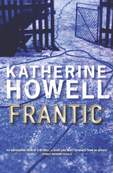
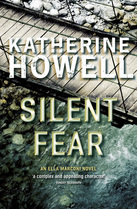
My first novel, Frantic, was published in Australia in 2007 and features police detective Ella Marconi alongside paramedics. It’s since been followed by three more novels, with the fifth in the series, Silent Fear, due for release in February. Each continues the angle of using paramedics as protagonists, something that not only provides a point of difference for the books but also draws on my experience of doing that job for fifteen years.

I’m often asked about the process of turning that real-life experience into fiction and I always answer that it wasn’t easy. I initially resisted the idea completely, and instead wrote bottom-drawer manuscripts about - variously - cults, forensic science students, and cops chasing a killer while being assisted by a ghost. When I did start to recognise the drama and inherent story value in the world I worked in, my first attempts to put any of it on paper overflowed with my grief and anger about the situations I faced daily and the people I tried to save. It took counselling and my eventual resignation to manage these emotions, and even then it was months before they disappeared completely from my writing. Once that happened, however, I was faced with the next problem: how to use these paramedic stories in the procedural crime series I was determined to write.

I’d wanted to have a paramedic as my protagonist, but I couldn’t see how to have her plausibly solving crime, and I had no clue what could then happen in the next book. I came to realise that I needed a police detective; a scary thought at first, because my reason for using the ghost in that earlier ms was because of the difficulty in learning the details of how exactly police solve a particular crime. Even when I started researching, I felt a huge gap in my knowledge—I knew the paramedic’s world so well, it seemed wrong to not have the same understanding of the detective’s. I wanted to be true to these jobs, and to not know it all made me think I couldn’t do it justice. I saw, however, how many crime novels are written by non-cops (ie, most of them), and decided I had to at least give it a try, being as true along the way as I could.

This then brought up another problem: to me, being true to the job of paramedic meant putting in every moment of a case, every question and answer, every action, every step of treatment. But as my manuscript grew longer, with scenes rolling on interminably for pages, I realised this wouldn’t work. I reread some of my favourite crime novels, analysed how the authors delivered information, and saw that I needed verisimilitude rather than total adherence to the facts. The real-life details were like a garnish, to be sprinkled in here and there to add flavour and impact. Too much of it overwhelmed the most important element of all, the reason people pick up a book: story.

I went back to the start of the manuscript and changed how I incorporated my experiences, and finally saw the work come alive. Months of hard work later, and a year after I quit that job, the ms sold as part of a two book deal to Pan Macmillan, and as I write now I keep the ideas of ‘detail is garnish’ and ‘story is king’ foremost in my mind.

Thanks, Katherine – I guess the right protagonist isn't necessarily the one you know inside out. Katherine's site: http://www.katherinehowell.com/

Tuesday, November 15, 2011

Conjuring Nonsense by Sam Bowring


Sam Bowring is a writer and standup comedian living in Sydney. He has written for TV, including Rove and The Comedy Channel, as well as stage plays, books for children, and fantasy. Sam's fantasy series, The Broken Well Trilogy, is published by Orbit. Today, Sam is channelling loose thoughts on fantasy names.


For me, one of the hardest parts of writing a fantasy story is thinking up names - for characters, places, magical swords and such - that do not sound completely cringe-worthy. I’m sure I’m not the only one who, upon inspecting the blurb of a potential read, has flung it back on the bookshelf in disgust because it said something about a hero called ‘Nynmn’dryhl of the Xyl’turym’. Can I buy a vowel, please?

That said, appreciation of fantasy names is a personal thing, about as subjective as it gets. How can anyone guess what collection of randomly spliced letters will prove pleasing to the ear of another? One person’s ‘Nynmn’dryhl’ might be another’s ‘Bilbo Baggins’. It would be arrogant to stand here (sometimes I write standing up) and tell you what does or does not make a good fantasy name. Especially when I myself have created names that look like I tossed the alphabet against the wall, and whatever stuck to the peanut butter was what I went with. It’s very hard to get these things right by everyone. One of my good friends, for instance, never lets me forgot that I named a place ‘Whisperwood’.

‘Whisperwood,’ he will say, years later, out of the blue, shaking his head in dismay.

What I can give are tips on approaches, if not results. The best way to decide results, I find, is to simply ask people you trust, ‘does this name work for you, or does it make you want to jump out of your skin into an acid bath?’

One approach, which I imagine is a common starting point for many authors, is to simply diddle around with syllables, putting them together in various ways, saying the words aloud until striking upon a pleasing combination. I do not own the patent for this, and drugs are optional.

Another approach is to be derivative in some way. For example, in my book Prophecy’s Ruin, there is a nasty little talking bird who revels in lies and manipulation, and generally screwing things up for everyone. His name is Iassia, which is very much inspired by that classic silver-tongued Shakespearean villain, Iago. Such derivation need not be based on another character, of course, but may take as its basis a descriptive word for the character’s persona. My character ‘Malevot’, for example, is taken from ‘malicious’, ‘malevolent’, and possibly, ‘Malcolm’ (see next point).

A third approach I use is to take a real-world name, and simply change a letter or two. I find this especially useful when it comes to small-time characters, and means I wind up with a lot of farmers called things like Borry.

Incidentally, I find small-time characters the most difficult to name. The reason is, it still takes time to come up with something good, and when I finally do, I don’t want to waste it on some two-line nobody. Thus I am forever transplanting good names from incidentals to mains, leaving all guards-who-are-about-to-get-killed with necessarily dubious monikers that I have no fear of becoming attached to.

On the subject of real-world names, one thing I always find jarring in fantasy is when a real name is mixed in with the made-up ones. Amongst the Nynmn’dryhls and Dakurs, why, here’s Mary everyone. ‘Let me introduce you to Mary, Nynmn’dryhl!’ Whether this incongruity reeks of laziness, or the author just liked the name Mary a lot, I’m never really sure ... but I just don’t buy Zeddicus Zul Zorander having a grandson called Dick.

Something rarely seen in fantasy is two characters sharing the same name. In the real world we have plenty of Johns and Susans. If you can believe it, we even have plenty of Schapelles and Mercedes. In fantasy, however, you just don’t get such realistic repetition.

‘I am Zarrakvah, Lord of Darkness.’
‘Hello there, my lord. I’m Zarrakvah too, shearer of sheep.’
‘Ah. Well, that seems to undermine my mystique a little, does it not?’
‘Aye, sorry lord. I was named after my uncle Zarrakvah, actually.’

You never get this scene in fantasy, maybe at a cocktail party:

‘Greetings.’
‘Oh, greetings to you … er … sorry, was it Teremond?’
‘Actually it’s Deridas.’
‘Sorry, of course. That was going to be my next guess.’

Parents of fantasy book characters are like the worst of movie stars, forever trying to bestow their spawn with unique and original names, to signify their amazing individuality. Did they go through the approaches I have previously described? Two high elves sitting by the cradle, thuggishly ramming letters together in ways their makers never intended, until all that’s left to decide is where to flick the arbitrary apostrophe? ‘Well,’ they gush later to their friends, ‘we just thought, you know, shelooks like a Gwyn’talamodrin!’

It’s something I have pondered at length (I need to get out more), and I can appreciate why this one-off naming system exists. It would be confusing, of course, to have two Gwyn’talamodrins running about in any given universe, especially if they rent from the same video store.

I recently decided to buck this trend, however (though no one in particular was challenging me to), and am proud to announce that in my upcoming books, there are not one, not two, but three characters who share the same name. Which is Hanry, by the way. So good on me, eh?

EH?

At least, when all is said and done, no matter what names you have come up with, be assured that any given reader probably won’t pronounce them in the way that you intended. The way someone reads a name the first time is how they will remember it for life - even if they’ve subconsciously added extra letters, recklessly ignoring all laws of phonetic pronunciation. It’s kind of an inbuilt safety mechanism for the author, as readers superimpose their own preferences over the utter nonsense you have dished up to them, to make it more personally palatable. 

It even happens with seemingly innocuous names. I have a friend who pronounces Fazel as ‘Fah-zel’, as opposed to ‘Fay-zel’ and do you think I ever once cleared my throat to inform her, in haughty tones, that she isn’t saying it right?

Ho ho, no. I’d rather she say it how she wants, and think me cleverer than I am, at coming up with names she likes.

Finally, the best way to know that you have gotten a name right - or, at least, are happy with it yourself - is when you finally add it to your spellchecker as a real word. This way your word processor is not constantly underlining it red, as if to ask, ‘Are you sure about this? Really? Are you sure?’

I have not yet done this with Nynmn’dryhl.

Also, I do not really write standing up.


One of the most frequent FAQs is how fantasy authors come up with names. Thanks for answering it for me, Sam. And for the laughs.

Sam's website is http://sambowring.com/