Showing posts with label Writing life. Show all posts

Monday, November 28, 2011

Josephine Pennicott on Obstacles and Inspirations

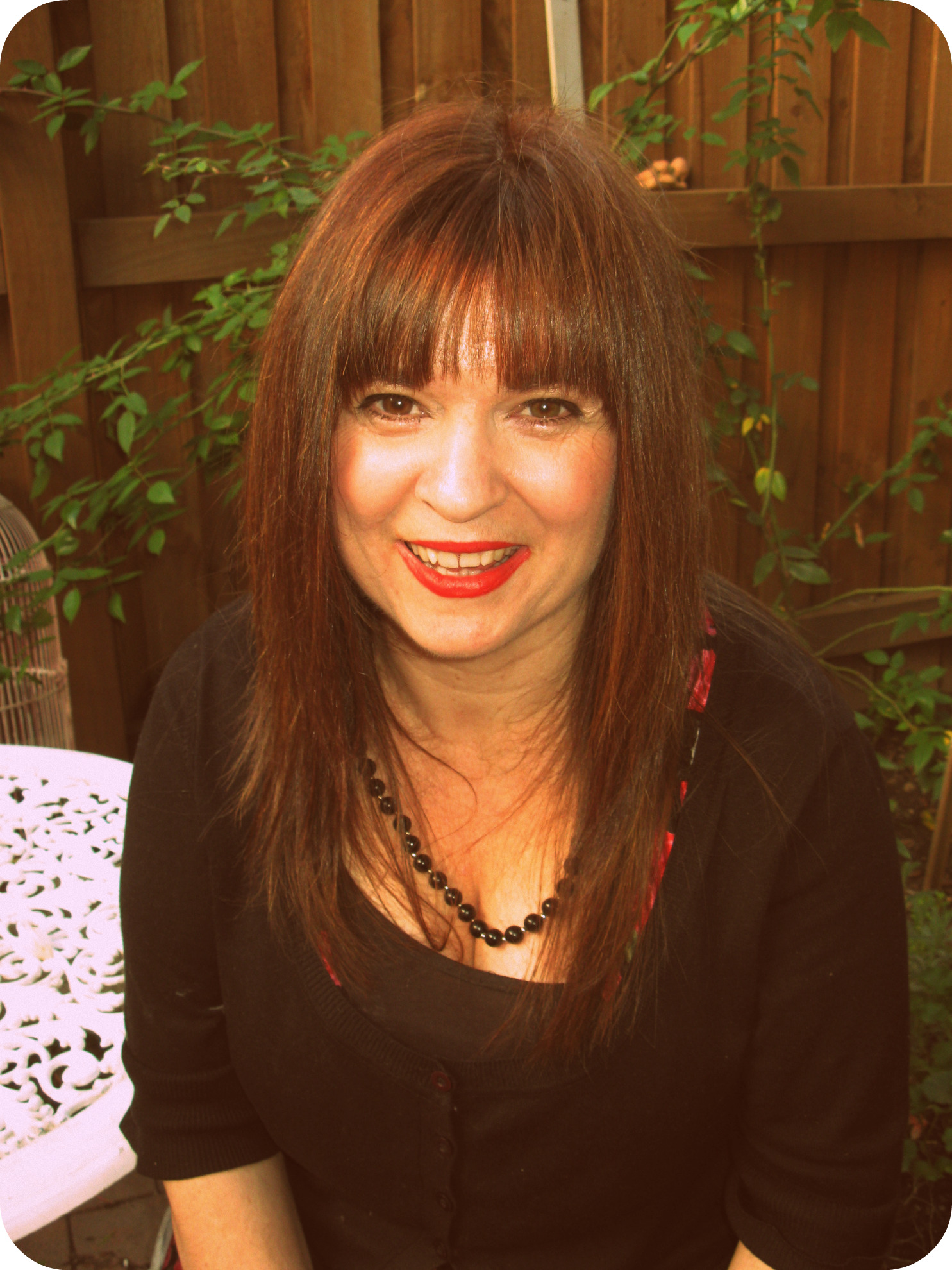
Josephine Pennicott is a multi-award winning crime writer who has won the Scarlet Stiletto and (twice) the wonderfully named Kerry Greenwood Domestic Malice Prize. Jo has also written a dark fantasy trilogy, Circle of Nine. Today she reflects on writing obstacles and inspirations.


Thank you Ian, for inviting me to submit to your Blog. Those of us lucky enough to know Ian personally, know that he’s a gentleman who is incredibly generous with his support for other writers. Being part of an online writing community of fellow Selwa Anthony authors, I’ve read and gleaned a lot from Ian’s experience and wisdom over the years. So, of course I couldn’t refuse his invitation to be a part of his online project to help others.

My first novels were Dark Fantasy, published by Simon and Schuster (Earthlight imprint) - Circle of Nine (2001),Bride of the Stone (2002) and A Fire in the Shell (2004). They were the result of years studying painting at the College of Fine Arts in Sydney. They evolved from my own artwork, my interest in Surrealism, fairy tales, mythology and comparative religions, in particular Paganism. Circle of Nine was selected by Terri Windling and Ellen Datlow as one of the top ten debut books for their prestigious 2001 anthology, The Year’s Best Fantasy and Horror. They will soon be republished by Pan Macmillan as e-books.

Afterwards I spent three years – a very difficult time with all sorts of obstacles in the way of my writing - working on what I shall jokingly refer to as my ‘masterpiece.’ You know when you read authors saying they wrote a list of all the things they loved, put all those elements in their book, and it became a bestseller? Well, that’s what I was after! I began writing a historical, supernatural murder mystery called The Witches of Paris. I submitted the proposal to Selwa, who was very keen. Sophia Coppola was rumoured to be directing a movie based on Marie Antoinette; my book was set in a similar location and so it seemed like a timely idea.

But in 2007, when The Witches of Paris was still not quite done, I went on holiday with my family to Stanley on the North-West Coast of Tasmania and fell in love with a white house by the sea. A house that became incredibly important to my writing career. It gave me an idea for a new book, Poet’s Cottage, which Selwa encouraged me to start while I was waiting for an editor’s report on The Witches Of Paris.

The more I worked on Poet’s Cottage, the more the characters came to me. I had been to India in my early twenties and stayed at a well-known spiritual Guru’s ashram who had a saying, ‘Take one step towards me and I’ll take a thousand towards you.’ This book was exactly like that. My characters literally dragged me into the story. They were waiting for me every morning and the process became very exciting.

I forgot my previous project for the time being as I began to lose myself in the mystery of who killed Pearl Tatlow, bohemian children’s writer, in her dark and eerie cellar on a foggy day in Pencubitt, Tasmania in July 1936. Was she really murdered by ‘the Tasmanian devil that Mummy kept in the cellar to threaten us with when she was writing?’ as her daughter Thomasina, who witnessed the murder, claimed. Or, did something far more sinister cross the threshold of Poet’s Cottage? A stranger to the town, as the local people kept insisting – or someone Pearl knew and trusted?

As I mentioned, I was on holiday with my family when I first spotted the house that ignited the spark that became the book Poet’s Cottage.

In my Sydney life, I live with my daughter and my writer husband, David Levell, in a small, historic brick house in the inner-west. It’s like a tiny doll’s house and my husband is used to me falling in love with houses on all my trips. I’m a very proud fifth generation Tasmanian - and often homesick for my home state.
This particular house ticked all my boxes – it was a white Georgian-style home that looked like something the Bronte sisters would have lived in. It overlooked the sea, in a picturesque, Tasmanian sea-fishing village. A village that was a combination of wild gothic, isolated coastline contrasted with a very Cornish looking, cosy village that could have come straight from an Enid Blyton or Daphne du Maurier novel!

I felt that this house had a story to tell me. There didn’t appear to be anybody living there and so my imagination was free to conjure up a myriad of scenarios. I spent a lot of time standing outside the gates, listening for the secrets and stories that I felt sure the house was trying to whisper to me.

There was a friendly gentleman who said hello to me in the street every day. On one of our meetings, I confided I’d fallen in love with the house, and he beamed, ‘That’s Poet’s Cottage! And I’m the poet who used to live there!’ This friendly local was Lin Eldridge – when he discovered I was a writer - he introduced me to his 90-something year old wife, whose name is Marguerite Eldridge. Marguerite and Lin live in Gull Cottage; my Birdie Pinkerton lives in Seagull Cottage in the novel. I had no idea when first meeting this charming, pretty and twinkly eyed lady that she was actually quite a well-known identity in Tasmania. Marguerite, who has never left her fishing village (and I can easily understand why) has self-published several books on life in Stanley. She has been instrumental in her town for starting creative ventures. In January 2011, she was awarded an Australia Day Award, for her service to the creative arts and her community.

They were a most welcoming couple, just as Birdie does in Poet’s Cottage, Marguerite urged me to ‘help yourself to my Daphne’ and they tolerated with good spirits my small daughter running amuck in Gull Cottage. Marguerite helped to inspire my character of Birdie Pinkerton - as did another elderly lady that I knew and visited in my high school years in Tasmania. But Birdie Pinkerton is not Marguerite - despite sharing several things in common.

Over the years I was always fascinated by the story of Enid Blyton’s two daughters, Gillian and Imogen, having opposing views of their mother. I remember one story in the UK Telegraph, Was Enid Blyton the Mother from Hell? I’ve seen in my own family how different members could all have totally variant views of an incident- and how sometimes it was impossible to fathom what was truth.

I’m also addicted to the UK TV show Midsomer Murders, with its surreal but quite realistic juxtaposition of pretty English villages and murder most foul. Daphne du Maurier and Agatha Christie are both writers I love. I’ve won quite a few awards over the years for my crime writing short stories, which were always very dark. I love reading cosy, English-style mysteries and I wanted to set myself the challenge of writing an English style mystery but with an Australian setting. All these elements came together at Stanley. Tasmania was a perfect place to set the book as it’s so English looking!

I used elements of two Tasmanian towns for my imaginary town of Pencubitt for Poet’s Cottage, Stanley in the North-West and also Oatlands, which is the very pretty midlands Georgian village where I spent my high school years. My early years were spent in Papua New Guinea. Generations of Pennicotts have settled in Oatlands and the name seems to belong to the town and area.

It was a joy to escape into my imaginary fishing village of Pencubitt every day from my garden writing shed in Sydney with planes flying overhead and heavy traffic outside the front door of our brick house. I based the character of Sadie (in the present day thread of the book) and her daughter, Betty on a lot of mothers I saw around me in Sydney’s inner-west. A majority were older mothers and trying to parent in a different way to their mother’s generation. They weren’t trying to be friends so much with their children but there was a difference in the dynamic that I was trying to capture. Sadie also helped to partially satisfy my own longing for a sea-change.

Pearl Tatlow in the 30s thread evolved from years of watching crime dramas set in the 1930s. And also a little of Enid Blyton and Jerry Hall, the Texan model went into my boho Pearl. I once saw Jerry Hall strut her stuff down a Sydney street and never forgot the impact her beauty and sassy attitude had on the gawping crowd of normally too-cool-for-school city folk.

Birdie Pinkerton was inspired by the two older ladies mentioned above. She was always very strong and quite stern with me when I wasn’t capturing some aspect of her character.

Maxwell was inspired by a gentlemanly, kind and caring Uncle of mine. I always enjoyed Maxwell’s sweet and considerate manners when I was working.

Thomasina just came striding in to the writing shed, with her beanie on her head, filled with a terrible memory and some really fun scenes for me to write for her. She was always strong, always unpredictable and very touching to connect with. I grew to care for all my characters very deeply over the three years it took to writePoet’s Cottage.

Looking back, I’m thrilled with how things worked out. The Witches of Paris was a love letter to France and I still hope to see it published one day. Poet’s Cottage is a love letter to Tasmania, my home state. My father, who had always been one of my most staunch believers of my writing from when I was a little girl, has been battling a very aggressive cancer for five years. I realised towards the end of writing Poet’s Cottage – the cancer reached his liver just as I finished the copy edit - that Poet’s Cottage itself had become not just another historic house I had fallen in love with - but rather it represented something a lot more personal. It was a dwelling between the worlds where my ancestors resided and represented all the secrets, dramas, misunderstanding, passions and mysteries (not to mention the enormous family love) that we all have hidden in our respective family cupboards.

If you’re in need of some inspiration to get you out of any pity-tea party you may be enjoying when it comes to your writing, I hope you can find it in my post. I was determined, focused and able to walk away from three years of working on a dream and start again for another three years with a different book. If I can do it –so can you. Sometimes whether we realise it or not - and however it may seem at the time – everything does work for our greater good. If you get rejected and your ‘masterpiece’ is knocked back – then write another. If it takes you years as it did me – that’ s fine. Your ego will live with it if you’re following your spirit’s path.

We’re all conditioned to believe all the success stories on writers the media broadcast but the reality is much grimmer for working writers that I know. They may get a few books published and then they have to go back to the drawing board. It’s a touch business, it can crack your heart open - and you do have to be tough as old boots to cope with it at times.

Looking back, I can see how all the characters in my writing career played their parts perfectly. I’m forever grateful that Poet’s Cottage beat The Witches of Paris to publication because it meant so much to my father to see me finally get taken seriously with a book set in Tasmania. And, I do plan on returning to my Parisian witches with all the new skills I’ve learnt over the last seven years. But first I have another mystery novel to complete for Pan Macmillan.

Writing can be a tough, bitchy, hard, isolating, heart-breaking profession at times. And that’s the good days. But I’m very honoured to be a Tale Peddler and to experience the joyful bliss of characters flowing, manifesting and telling their story. So give thanks for it all. The good fortune, the set-backs, the rejections and the awards. Don’t believe books and your career have to follow a set path. Keep open to your own personal timing and rhythm. No matter how things may appear at the time – use the experience. Both the so-called ‘good’ and the ‘bad’ can honour a higher purpose - and if you are patient and diligent enough – and believe in a little bit of pixie and glittery wishing dust - the seeds you scatter will be harvested.

Thanks very much, Jo, that's a lovely and inspiring story. Poet’s Cottage will be published by Pan Macmillan in May 2012.
Josephine Pennicott's site is here: http://www.josephinepennicott.com/
You can find Josephine on her blog Tale Peddler, http://talepeddler.blogspot.com/
and on Twitter, Facebook or Good Reads.


Thursday, November 24, 2011

Jason Nahrung on Writing Joys and Frustrations

Jason Nahrung has been a newspaper journalist for more than two decades. He's also a fiction editor, judge of speculative fiction, and writer of darkly themed tales including the supernatural thriller, The Darkness Within. Today, Jason muses on the joys and frustrations of being a writer.


It’s not you, it’s us.

It has been an ... interesting past couple of months. My wife, Kirstyn, has been devoting every spare moment to her novel – by coincidence, her publisher’s deadline coincides with our departure for a wee break. And I’ve had a self-imposed deadline, knowing it will be good for my morale to be able to go away and leave my agent with the latest iteration of the novel I’ve been trying to get right for more than 10 years. This time, please Writing Gods, may it all make sense...

All of which means we’ve been fairly anti-social. I’ve stayed in partly out of sympathy, not wanting my wife to feel like some kind of pariah while I’m off gallivanting around the country. Plus, it’s a great excuse for me to stay home and be indulgent: a short story here, that pesky novel mostly there.

So why the guilt?

Why the compulsion to explain in rigorous details about publishers and deadlines and day jobs and available time and word counts? Why the compulsion to apologise?

After all, if I said we weren’t attending some soiree or event because I had to train for the grand final, there’d be nothing but words of encouragement. If I said I was pulling serious over-time because the office was understaffed, there’d be nods of knowing understanding. But not doing something because you’re writing? In my case, without even a deadline? Without even the certainty of a pay packet at the end of it?

What sort of alien must I be?

Writing is, after all, at my level of the vocation, something to be fitted in around the day job. Around life. You pay the bills, you catch up with the people you care about, you be entertained ... and then you write.

I hate that I am so used to the arts not mattering that I automatically become defensive when explaining how I’ve made my art, if I may be high-falutin’ for a moment and call what I do art (hm, is that that defensiveness coming in? It’s a nice story, dahlink, but is it art?), a priority. How, like sport, it needs to be practised and trained for; how, like a day job, it needs regular attention and commitment. How, sometimes, especially towards the end of a project, it can require a degree of sacrifice. No telly. No cinema. No gigs (no gigs!).

You can take it too far, just as you can with sport and your career. You can sacrifice the enjoyment of life, the company of friends and family, for a supposedly loftier goal, and therein lies the risk of a pyrrhic victory. But sometimes, you have to give in order to get – sometimes, the enjoyment of life means having to give something up – even if those around you might not understand.

Fortunately, most of our friends and family do. Without that acceptance, it’d make the job that much harder. It’s important, I think, if you’re going to snub someone, that they understand exactly why; that they know that the job’s important – not more important, just, at this moment, important enough to skip lunch.

I have to take my hat off to Kirstyn. I don’t know how she can work her day job and then switch over for a six-hour writing stint, night after night. By knock-off time, my eyes are dripping out of my skull, the keyboard is an arcane thing, but there she sits, crafting, crafting, crafting. Occasionally fending off the cat, who hasn’t had lap time for, like, forever.

I’m looking forward to going out once more. I’m looking forward to our holiday. I’m looking forward to seeing Kirstyn’s book upon the shelf, and maybe mine, too (please Writing Gods, this time...?). Bear with us, gentle friends; we will return to the scheduled program, right after these messages... but I’m trying not to apologise for the interruption. I’m sure you’ll understand.

Jason Nahrung's only novel, The Darkness Within, can be difficult to find these days (you can try the Book Depository UK), but he's got a bunch of short stories out this year in various Australian anthologies, and a couple due out next year, too. Track him down atwww.jasonnahrung.com. Kirstyn McDermott's debut novel, Madigan Mine, came out last year. She's almost finished her second novel, working title Perfections. Almost. You'll hear the  shout of joy first at www.kirstynmcdermott.com.


Thanks, Jason. A timely reminder that (believe it or not) we writers are people like everyone else. Well, except that we can go to work in our underwear and have afternoon naps by the fire, ha! Beat that, commuting work slaves!


Wednesday, November 9, 2011

On Reading Like a Writer – Claire Corbett

Claire Corbett has worked as a government policy adviser on water, genetically modified organisms and child and family health. She has had essays and stories broadcast on Radio National and published in Cinema Papers, Picador New Writing and The Sydney Morning Herald, among others. She completed the MA Writing (UTS) in 1997 and a Varuna Mentorship in 2000. When We Have Wings, her first novel, was published by Allen & Unwin in July 2011 to rave reviews. Today Claire is talking about reading like a writer.


Every writer, on being asked to give advice for emerging writers, will emphasise the importance of reading widely.

There is something to be said about the kind of reader you become once you start writing seriously, though, especially once you start to feel surer of your own style. At first it seems hard enough to write a decent sentence; then there are struggles with tense, point of view, and structuring a plot.

As I began to become more confident with some of the technical challenges of writing narrative fiction I noticed to my surprise that the way I read began to change. If a story impressed me, instead of just surrendering to it, I began to look more closely, to take it apart to see how it worked. Visual artists do this all the time, perhaps more consciously than many writers. An integral part of art training is (was?) to copy old masters until their tricks and techniques were known, understood and could be incorporated into the student artist’s repertoire.

I had already been through this process with film; I studied film-making during my Communications degree and went on to crew on feature films. I was fascinated by the technical difficulties of film-making, devouring issues of American Cinematographer and books written by directors. I learned deep respect for craft as I studied film stocks, lighting, processing, sound effects, mixing soundtracks and so on. I could watch a film, analysing the skills with which it was made while still enjoying the story and artistry.

Oddly, it took years before it occurred to me to do this with reading. I was so enthralled by writers I admired that I was swept away every time. I was aware that some writers I’d read and re-read obsessively had influenced my very sentence structures by osmosis, and I thought this was the only way to learn to write. I still think this is true of the way a writer’s deepest self is formed – through childhood reading. This is the way your ‘ear’ is trained for the sound and rhythm of the English language. Clearly that training can occur in other languages as some writers whose first language is not English, such as Conrad and Nabokov, are among our finest.

I remember the first time I wondered about the skill in a particular technique and considered whether I might teach myself how to do it. I was reading Kazuo Ishiguro’s Remains of the Day and marvelling at how readers know only what Ishiguro’s narrator, the butler Stevens, tells us and yet we have a completely different view of events and of Stevens’ actions than he does. The writer never speaks to us directly, all we have are Stevens’ words, and yet we have at least two views of the events in the novel, the butler’s and our own (or possibly Ishiguro’s).

Most writers would probably try to give us a different view through the perspective of another character but somehow Ishiguro manages to give us at least two views through only the one lens. The subtlety of the technique is breathtaking and Stevens is proof you don’t have to find a character ‘likable’ to empathise with him. Stevens would refuse the reader’s sympathy. Yet still, you feel. No wonder that novel won a Booker prize.

Another writer whose technique I tried to unravel is possibly the world’s greatest short story writer, Alice Munro. Her stories end with a punch to the heart but she rarely relies on the ‘twist’ so beloved of short story writers. It took me many re-readings to pin down exactly how she does it and in the process I worked out why her style and her emotional power depends so heavily on the stories being shorter, why what she does would not work in novels. Ah, I hear you say. And how does she do it? I can do no better than point you in the direction of collections such asRunaway or The Love of A Good Woman or The Progress of Love.

A technique I had to consciously teach myself – painfully at first but I like to think I mastered it – was free indirect speech. Critic James Wood lays out how free indirect speech works brilliantly in his discussion of Jane Austen in his book of essays The Broken Estate. In When We Have Wings I have two narrators, the young flier Peri and the private investigator searching for her, Zeke. Zeke had to speak in first person because he is the reader’s guide through the new, strange world of the winged.

I felt I needed to write Peri’s part of the story in third person but in early drafts she was too remote, lacking in feeling, and the word choice was more mine than hers as the character. Using free indirect speech, where the third person can occasionally slip in and out of first person, brought Peri closer and allowed her to express her thoughts directly. This technique takes practice to make it supple but may have erased that distance so well that readers barely seem to notice that one strand of the book is in first person and one in third.

So my message is: read widely, read at least some work that is difficult, not because it’s badly done but because it’s trying to do difficult things, and most importantly read beyond whatever genres you like and want to write in, including literary fiction. I can’t stress this enough. Just reading young adult won’t give you anything new to bring to young adult fiction, you might get an amazing idea for a fantasy tale from a business book (this seems to be the secret to much of Terry Pratchett’s comedy!) and if you read something you love, experiment with trying to make that technique your own. I don’t read much crime fiction and yet a crime novel gave me one of the most thorough master classes in style I’ve ever had. It’s a lesson I’ll never forget.

Thank you, Claire. I definitely need more practice in reading like a writer. 

Claire's website is here: http://www.clairecorbett.com/

FOOTNOTE, March 2012. When we Have Wings has been shortlisted for the Barbara Jefferis Prize, a major Australian literary award.

http://www.clairecorbett.com/news/2012/3/8/shortlisting-for-the-barbara-jefferis-prize.html


Tuesday, November 8, 2011

My Tortuous Road to Publication


I’m not sure exactly when I had the idea of writing a fantasy novel, though it must have been sometime after July 1977, because that’s when I bought and read Terry Brooks’ The Sword of Shannara.

It wasn’t the story that inspired me, though. I’d read a huge amount of fantasy by then and found the plot to be too close to The Lord of the Rings. My inspiration was the map – but not in a good way.

The map in The Sword of Shannara so irritated me (because it seemed so clichéd, and so wrong) that I sat down on the spot and began to create my own, based on what I believed a real fantasy world should look like. Here’s a small, early version, done in 1978.

This soon became an obsession. At a time when I was supposed to be writing my thesis, I redrew the maps in greater and greater detail, until they were the size of house doors, then began to work out 10,000 years of history (as one does), the politics and economies of some of the countries therein, the peoples and ecosystems.

And then, snatches of characters, many of whom would appear in The View from the Mirror a decade later – Mendark, Shuthdar and the Golden Flute, Yggur, Faelamor, Kandor (who became Rulke), Kyllian the bard, who became Llian the master chronicler, Karan, my favourite character, and Yfanna, who became Maigraith.

Finally, on June 25, 1979, on a train in Finland, I wrote the first snatch of the story – Kyllian leaving Chanthed for the mountain inn at Tullin. Not very good, is it? But at the time it wasn't intended as part of a novel. It was just a moment that occurred to me.


What with finishing my thesis, taking a demanding consulting job, looking after little children and renovating a lovely but decrepit Victorian house in Sydney, 8 years went by before I had the time to formally begin writing – in longhand. It was September 1987 and I figured if I wrote 3 pages a day, I’d have a first draft done by Christmas.

By the time I was halfway through the story, then called The Mirror of Aachan, I knew that I wanted to spend the rest of my life writing stories. I finished the first draft 5 days early but, to my astonishment, the story ended on a cliff-hanger with possibilities exploding out in all directions.

A month later I’d worked out that there would be four books to the story, now called The View from the Mirror, their titles and, in some detail, what would happen in each book. I did several more drafts of the first book then, in 1989, looked around for a publisher.

At the time, no Australian publishers were publishing science fiction or fantasy for the adult market – see my post on the Golden Age of Aussie Publishing,http://ianirvine.blogspot.com/2011/10/golden-age-of-publishing.html.

But I probably wouldn’t have sent it there anyway – I’d decided to try Unwin Hyman, in London, publishers of The Lord of the Rings and a number of other great fantasy novels. They knocked it back, but very kindly, saying that they’d be happy to see a revised version, or anything else I cared to send them. However when I sent a much revised version, months later, they had just been taken over by Harper Collins, who had closed their list.

Various other disappointments followed from the UK and US, sometimes after agonisingly long times – one NY publisher took 13 months to respond. I never sent the same manuscript out twice – I always revised it several more times, and kept working on the other three volumes of the story.

In the early 90s, Australian publishers, particularly Pan Macmillan, began publishing speculative fiction. By this time my story was complete – I’d done about 18 tough drafts of A Shadow on the Glass and even 4 or 5 of the final book, The Way Between the Worlds.

Unfortunately, by the time my manuscript of A Shadow on the Glass arrived, Pan had been burned by a number of failures and were pulling back. They wrote me a nice but painful rejection letter, to the effect that, ‘We agonised about whether to publish your book, but decided not to.’

However they also did me a favour by suggesting I commission Dr Van Ikin, the long-time speculative fiction reviewer for the Sydney Morning Herald, to assess the manuscript and provide suggestions for improvement. I did so, followed Van’s many suggestions to the letter and when he looked at the revised version he said, 'You've got it! Send it out.'

By this time (January 1996) Harper Collins had had a big success with Sara Douglass’s Battleaxe, so I sent the mss to them, along with a copy of Van Ikin’s effusive letter. They rejected it, saying they’d be willing to consider a revised version. They also included comments from an unnamed external reviewer who thoroughly disagreed with Van’s assessment, and made a series of what I considered to be ill-informed critical comments about the book.

I didn’t bother to send them a revised version; instead I looked for another publisher. My father-in-law, John Rummery, a former English lecturer who had enjoyed the story, contacted a friend and colleague, John Cohen. John Cohen has an encyclopaedic knowledge of fantasy and for many years had been the editor of Reading Time, the book review journal of the Children’s Book Council of Australia (and he still is).

John loved the book and contacted Nancy Mortimer, then the education publisher at Penguin Australia, who asked to see it. In May 1996 I sent her the huge manuscripts of the first two books – a cardboard box full of paper. After looking the manuscripts over, Nancy agreed and gave them to Kay Ronai, a vastly experienced editor who had also edited some fantasy authors, asking for a book report. Kay loved the story and recommended that Penguin publish it. However she didn’t think they would, because Penguin hadn’t published fantasy for the adult market before, and they would have to commit to 4 very large books.

Kay’s report went to Erica Irving, then the publisher for the Children and Young Adults Department at Penguin. Erica wasn’t sure, and asked Isobelle Carmody, one of their star authors who wrote fantasy for younger readers, to take a look. Isobelle read the first book and said, ‘If you don’t publish this, someone else will.’

That’s how I came to be published.

I signed a contract with Penguin in October 1996 and the four books were published between February 1998 and September 1999. Only 11 years after I started writing, and 9 years after I began sending manuscripts.

The View from the Mirror is still in print in Australia 13 years later, incidentally. And in the UK.


Thursday, November 3, 2011

Karen Brooks on Giving Birth to a Book

Is there anything Karen Brooks hasn't done? An academic known internationally for her work on popular culture, an award-winning teacher who's also written eight novels and an acclaimed non-fiction book, Consuming Innocence – Popular Culture and Our Children, Karen is also a social commentator who appears regularly in print media, radio and TV. Oh, and among many other things she's also been a checkout chick, an actress and an army officer. Whatever Karen has to say is worth listening to and today she's talking about giving birth to a book – and a bit on the side.


Many authors liken the process of writing a book, never mind finishing one, to giving birth. Having just completed my ninth one, I’ve had cause to examine this analogy and, for the most part, wholeheartedly agree. Just like childbirth, books or word-babies are brought into the world amidst great joy, pain, struggle, exhaustion and with the aid of assorted medicinals – usually, the liquid kind. The latter self-administered and in varying quantities. For a lucky few, some books make their entry more easily and with less hangovers.

Whichever way the work arrives and no matter how many you’ve written, the end result is fundamentally the same: you’re the mother or father of a beautiful lexical child. At least, that’s how you consider it until someone tells you otherwise. The one guarantee about being a writer and birthing a book, as opposed to a human, is that there’s always someone out there prepared to tell you that’s one ugly baby you delivered.

Now that I’ve reached the end of The Curse of the Bond Riders trilogy, having recently handed to my publisher my 220,00 word-child, titled Illumination, replete with structural flaws, grammatical foibles and syntactical problems (that like a good midwife/paediatrician, she’ll help me smooth over so people don’t scream when they peep in the crib), I’ve decided that completing Book Three wasn’t so much like giving birth as ending a long-term but deliciously complex and demanding relationship.

It’s not that I’m going through a divorce so much as a separation – one I’ve initiated – but that doesn’t make it any easier.

I’m heartbroken. I find myself turning to Shakespeare and quoting Romeo and Julietto describe how I feel: “parting is such sweet sorrow” seems to almost capture it. I feel the wrench of disconnection, the void of absence.

But, there’s another emotion alongside all these roiling ones and it’s threatening to dominate. To be utterly frank, I’m also experiencing relief – relief that after all this time, it’s finally over.

And that makes me feel guilty.

For the last six years, I’ve devoted most of my waking hours and spare time, some of it very intimate, to Bond Riders, and its rich and decadent world. I’ve neglected my partner, children and friends and been immersed in a different time and space and come to know all these wonderful and diverse characters who leapt from my imagination and onto the page. I’ve seen them and they’ve seen me, on our finest and very worst days. I’d even reached the stage of dreaming about them. I think it’s understandable then that I have a sense of ambivalence about our time together drawing to a close. On the one hand, I’m despondent about saying farewell to my beloved, but on the other, there’s also a tiny bit of me that feels liberated. Well, actually, a big part. You see, I have a confession to make…

For a short time, I’ve not been true to this relationship.

I’ve been having a bit on the side.

There, I admit it. Like an unfaithful lover, when I should have been focussed on Bond Riders, my thoughts wandered into a different tale. I started to fantasise about spending time with these new people and ideas. It’s not that Bond Riders lost its appeal; on the contrary, I loved it more than ever. But I also knew that just as my relationship with it must end, so a fresh one had to begin. It’s part of the deal of being a writer: that as one book cover closes, another opens. That this process started before I’d broken up with my last novel wasn’t intended. Really. I didn’t go looking for this. I didn’t ask for it to happen. It just did. Despite setting my trilogy in Renaissance Venice, I am no Casanova.

Call me a scarlet writer, a fallen novelist, I really don’t care. I am so thankful. You see, by moving on before my last writing affair is over, I’ve avoided something many authors, me included, fear: that when one piece of work is finished, there will be no inspiration or ideas for another one. That somehow, the old Writer’s Block will erect itself, the muse will take a holiday or resign in disgust, or the well of imagination will dry. I know some authors who wait months if not years before finding their next tale. So to discover mine when I did is beyond a reprieve: it’s a gift and I will take it with gratitude.

Now, I straddle an imaginary crossroads, where one book ends and another commences. I know the paths in both directions are beset with challenges even though they disappear into a mist-bound distance. It’s both a comfortable and awkward position to be in. I am Janus-faced: looking forwards to a virgin story and backwards to my old flame and its publication and reception simultaneously. Second-guessing my familiar work on the one hand, wondering what changes I’ll have to make, where I’ll spit and polish the manuscript, while on the other, creating afresh the triumphs and tragedies of a new world.

With Illumination off being edited and farewells almost complete, I’m just about free to consummate this new literary relationship. Currently, we’re still flirting, with ideas, characters and plotlines. At present, my tentative, rather shy steps have taken me into Fourteenth Century Britain and Flanders, the Hanseatic League, trade in various commodities, and into the lives of a strict merchant family with a dark and wonderful secret.

I am all a-tingle over this. One would think I should behave with more decorum, act my age and in a manner more appropriate to my writing experience. Truth is, I can’t help myself. Maybe it’s too strong a comparison to suggest I relate to the poet John Keats when he first read Chapman’s Homer and likened the encounter to being “some watcher of the skies/When a new planet swims into his ken…”, or the explorer Cortez who shared with this men the vista of the Pacific and was stunned into silence. There’s no doubt, I’m dazzled; I feel like I’m voyaging through untrammelled frontiers and the excitement is visceral and acute. It’s hard not to shout for joy from a mountain peak and become lost in the journey.

Even so, I won’t forget what brought me to this point, the relationship I laboured over with love and impatience for so many years.

Like all my books past, present and future, no matter whether it’s regarded by others as beautiful, ugly or with indifference, The Curse of the Bond Riders will always hold a special place in my writing life and heart.

Thank you for those lovely insights, Karen. It's left me with much to think about, and I welcome readers' comments.