Thursday, November 17, 2011

Katherine Howell – Story is King


Suspense is everything.

Katherine Howell was once told that her manuscript lacked suspense. She promptly studied the subject for her Masters degree, and now rereads her thesis when she starts each new book, to remind herself of the techniques of developing suspense in fiction. Katherine was a paramedic in the ambulance service for 15 years. She writes high-adrenaline tales of murder and intrigue, has twice won the Davitt Award for best novel, and her novels are published in many countries and languages. 

Today, she's talking about finding the right protagonist.


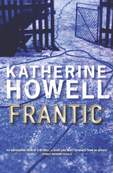
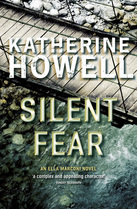
My first novel, Frantic, was published in Australia in 2007 and features police detective Ella Marconi alongside paramedics. It’s since been followed by three more novels, with the fifth in the series, Silent Fear, due for release in February. Each continues the angle of using paramedics as protagonists, something that not only provides a point of difference for the books but also draws on my experience of doing that job for fifteen years.
I’m often asked about the process of turning that real-life experience into fiction and I always answer that it wasn’t easy. I initially resisted the idea completely, and instead wrote bottom-drawer manuscripts about - variously - cults, forensic science students, and cops chasing a killer while being assisted by a ghost. When I did start to recognise the drama and inherent story value in the world I worked in, my first attempts to put any of it on paper overflowed with my grief and anger about the situations I faced daily and the people I tried to save. It took counselling and my eventual resignation to manage these emotions, and even then it was months before they disappeared completely from my writing. Once that happened, however, I was faced with the next problem: how to use these paramedic stories in the procedural crime series I was determined to write.

I’d wanted to have a paramedic as my protagonist, but I couldn’t see how to have her plausibly solving crime, and I had no clue what could then happen in the next book. I came to realise that I needed a police detective; a scary thought at first, because my reason for using the ghost in that earlier ms was because of the difficulty in learning the details of how exactly police solve a particular crime. Even when I started researching, I felt a huge gap in my knowledge—I knew the paramedic’s world so well, it seemed wrong to not have the same understanding of the detective’s. I wanted to be true to these jobs, and to not know it all made me think I couldn’t do it justice. I saw, however, how many crime novels are written by non-cops (ie, most of them), and decided I had to at least give it a try, being as true along the way as I could.
This then brought up another problem: to me, being true to the job of paramedic meant putting in every moment of a case, every question and answer, every action, every step of treatment. But as my manuscript grew longer, with scenes rolling on interminably for pages, I realised this wouldn’t work. I reread some of my favourite crime novels, analysed how the authors delivered information, and saw that I needed verisimilitude rather than total adherence to the facts. The real-life details were like a garnish, to be sprinkled in here and there to add flavour and impact. Too much of it overwhelmed the most important element of all, the reason people pick up a book: story.

I went back to the start of the manuscript and changed how I incorporated my experiences, and finally saw the work come alive. Months of hard work later, and a year after I quit that job, the ms sold as part of a two book deal to Pan Macmillan, and as I write now I keep the ideas of ‘detail is garnish’ and ‘story is king’ foremost in my mind.

Thanks, Katherine – I guess the right protagonist isn't necessarily the one you know inside out. Katherine's site: http://www.katherinehowell.com/

Tuesday, November 15, 2011

Conjuring Nonsense by Sam Bowring


Sam Bowring is a writer and standup comedian living in Sydney. He has written for TV, including Rove and The Comedy Channel, as well as stage plays, books for children, and fantasy. Sam's fantasy series, The Broken Well Trilogy, is published by Orbit. Today, Sam is channelling loose thoughts on fantasy names.


For me, one of the hardest parts of writing a fantasy story is thinking up names - for characters, places, magical swords and such - that do not sound completely cringe-worthy. I’m sure I’m not the only one who, upon inspecting the blurb of a potential read, has flung it back on the bookshelf in disgust because it said something about a hero called ‘Nynmn’dryhl of the Xyl’turym’. Can I buy a vowel, please?

That said, appreciation of fantasy names is a personal thing, about as subjective as it gets. How can anyone guess what collection of randomly spliced letters will prove pleasing to the ear of another? One person’s ‘Nynmn’dryhl’ might be another’s ‘Bilbo Baggins’. It would be arrogant to stand here (sometimes I write standing up) and tell you what does or does not make a good fantasy name. Especially when I myself have created names that look like I tossed the alphabet against the wall, and whatever stuck to the peanut butter was what I went with. It’s very hard to get these things right by everyone. One of my good friends, for instance, never lets me forgot that I named a place ‘Whisperwood’.

‘Whisperwood,’ he will say, years later, out of the blue, shaking his head in dismay.

What I can give are tips on approaches, if not results. The best way to decide results, I find, is to simply ask people you trust, ‘does this name work for you, or does it make you want to jump out of your skin into an acid bath?’

One approach, which I imagine is a common starting point for many authors, is to simply diddle around with syllables, putting them together in various ways, saying the words aloud until striking upon a pleasing combination. I do not own the patent for this, and drugs are optional.

Another approach is to be derivative in some way. For example, in my book Prophecy’s Ruin, there is a nasty little talking bird who revels in lies and manipulation, and generally screwing things up for everyone. His name is Iassia, which is very much inspired by that classic silver-tongued Shakespearean villain, Iago. Such derivation need not be based on another character, of course, but may take as its basis a descriptive word for the character’s persona. My character ‘Malevot’, for example, is taken from ‘malicious’, ‘malevolent’, and possibly, ‘Malcolm’ (see next point).

A third approach I use is to take a real-world name, and simply change a letter or two. I find this especially useful when it comes to small-time characters, and means I wind up with a lot of farmers called things like Borry.

Incidentally, I find small-time characters the most difficult to name. The reason is, it still takes time to come up with something good, and when I finally do, I don’t want to waste it on some two-line nobody. Thus I am forever transplanting good names from incidentals to mains, leaving all guards-who-are-about-to-get-killed with necessarily dubious monikers that I have no fear of becoming attached to.

On the subject of real-world names, one thing I always find jarring in fantasy is when a real name is mixed in with the made-up ones. Amongst the Nynmn’dryhls and Dakurs, why, here’s Mary everyone. ‘Let me introduce you to Mary, Nynmn’dryhl!’ Whether this incongruity reeks of laziness, or the author just liked the name Mary a lot, I’m never really sure ... but I just don’t buy Zeddicus Zul Zorander having a grandson called Dick.

Something rarely seen in fantasy is two characters sharing the same name. In the real world we have plenty of Johns and Susans. If you can believe it, we even have plenty of Schapelles and Mercedes. In fantasy, however, you just don’t get such realistic repetition.

‘I am Zarrakvah, Lord of Darkness.’
‘Hello there, my lord. I’m Zarrakvah too, shearer of sheep.’
‘Ah. Well, that seems to undermine my mystique a little, does it not?’
‘Aye, sorry lord. I was named after my uncle Zarrakvah, actually.’

You never get this scene in fantasy, maybe at a cocktail party:

‘Greetings.’
‘Oh, greetings to you … er … sorry, was it Teremond?’
‘Actually it’s Deridas.’
‘Sorry, of course. That was going to be my next guess.’

Parents of fantasy book characters are like the worst of movie stars, forever trying to bestow their spawn with unique and original names, to signify their amazing individuality. Did they go through the approaches I have previously described? Two high elves sitting by the cradle, thuggishly ramming letters together in ways their makers never intended, until all that’s left to decide is where to flick the arbitrary apostrophe? ‘Well,’ they gush later to their friends, ‘we just thought, you know, shelooks like a Gwyn’talamodrin!’

It’s something I have pondered at length (I need to get out more), and I can appreciate why this one-off naming system exists. It would be confusing, of course, to have two Gwyn’talamodrins running about in any given universe, especially if they rent from the same video store.

I recently decided to buck this trend, however (though no one in particular was challenging me to), and am proud to announce that in my upcoming books, there are not onenot two, but three characters who share the same name. Which is Hanry, by the way. So good on me, eh?

EH?

At least, when all is said and done, no matter what names you have come up with, be assured that any given reader probably won’t pronounce them in the way that you intended. The way someone reads a name the first time is how they will remember it for life - even if they’ve subconsciously added extra letters, recklessly ignoring all laws of phonetic pronunciation. It’s kind of an inbuilt safety mechanism for the author, as readers superimpose their own preferences over the utter nonsense you have dished up to them, to make it more personally palatable. 

It even happens with seemingly innocuous names. I have a friend who pronounces Fazel as ‘Fah-zel’, as opposed to ‘Fay-zel’ and do you think I ever once cleared my throat to inform her, in haughty tones, that she isn’t saying it right?

Ho ho, no. I’d rather she say it how she wants, and think me cleverer than I am, at coming up with names she likes.

Finally, the best way to know that you have gotten a name right - or, at least, are happy with it yourself - is when you finally add it to your spellchecker as a real word. This way your word processor is not constantly underlining it red, as if to ask, ‘Are you sure about this? Really? Are you sure?’

I have not yet done this with Nynmn’dryhl.

Also, I do not really write standing up.


One of the most frequent FAQs is how fantasy authors come up with names. Thanks for answering it for me, Sam. And for the laughs.

Sam's website is http://sambowring.com/


    Monday, November 14, 2011

    George Ivanoff on Setting Novels in Virtual Worlds


    George Ivanoff has written more than 50 books for children and teenagers, both fiction and non-fiction, novels, short stories (including a Doctor Who story), articles and school readers. He also moonlights as an actor and has been in numerous productions including Neighbours. His teen SF novel, Gamer's Quest, won a 2010 Chronos award. Today he's talking about writing novels set inside a computer game. Thanks, George.


    It all started with a documentary about online gaming. Watching it reminded me of how much I loved computer games as a kid and teen — how I loved blasting aliens inSpace Invaders and dodging large chunks of space-rock in Asteroids. I was obsessed! But it was more than the actual games. I loved the concept of playing on or with a computer. Consequently, I also loved any sort of fiction that used computer games as part of its narrative. Gillian Rubinstein’s novel Space Demons was a favourite. I also loved films like TRON and The Last Starfighter.

    After watching the documentary, I decided that I wanted to recapture my childhood excitement about computer games. I wanted to write some fiction that used games as an integral part of its narrative. And so I came to write a short story called “Game Plan” (published in Trust Me!, Ford Street Publishing, 2008), which I then expanded into a novel called Gamers’ Quest, followed by a sequel, Gamers’ Challenge.

    Both novels follow the adventures of two teenage thieves, Tark and Zyra, who live in a computer game world. In Gamers’ Quest, they don’t realise that they are characters within a computer game. To them, their world is very real; their adventures a matter of life and death. By the beginning of Gamers’ Challenge, they know they are inside a game… and they want out!

    Setting novels inside a computer game allowed me a great deal of freedom. I was able to play with the clichés of various genres and introduce some rather over-the-top characters — warrior monks, homicidal computer viruses, mages young and old, and some really evil villains.

    I was also able to indulge my childhood interests. Thinking back to when I was a teenager, I dug out from my memory all those things that I enjoyed in books and films and games, and then put them all into these novels. And so, we have magic swords, powerful mages, killer cyborgs, zombies, dragons, various mythical creatures, a giant robot spider, an invading army of Roman Centurions, and a climactic video game battle.

    Perhaps the most interesting part of writing these novels, has been the challenge of structuring them in the way of a computer game. Part of that is the pace — the story progresses at break-neck speed, the characters moving from one challenge to the next, with short chapters and quick scene changes. Then there is the matter of time — specifically the passage of time. As Gamers’ Quest begins, and Tark and Zyra set off on their adventures, I deliberately made sure to exclude any sense of night and day passing. They never stop to eat or sleep. Their only concern is the quest and the challenges they face along the way. Just like a computer game, the novel progress from one level of challenge to the next. They never have to worry about getting older or dealing with the problems of teenage-hood. They are perpetually perfect 16-years-olds, devoid of acne and angst, their only concern, the rules of game and the challenge of their quest.

    Gamers’ Challenge allowed me to play with this concept a little more. Because Tark and Zyra now know they are in a game, they are able to observe the peculiarities of their environment (and I was able to make observations about gaming). They now notice that night never falls, unless it is required for the game narrative; they get tired and feel the after-effects of a fight; they get hungry and need to search for food; pimples now become an issue and hair does not remain in perfect place without product; and they begin to age. So even though they are still within the environs of the game, they are no longer bound by its rules — they are within the game, but now living more ‘real’ lives.

    As a writer I am bound by the rules of a very different game — the publishing game! Although I have a third book planned, it won’t get written unless book two sells enough for my publisher to warrant the publishing of another. I’m desperately hoping that I do get to write it because it will allow me to play even further with the concept of computer games. In the third installment, Tark and Zyra will get out of the game and step into the ‘real world’. Readers will find out who controls the game, why it was made and what its sinister purpose is.

    I look forward to stepping out of the virtual world and presenting a very different view of computer games in this novel.


    Thanks, George. I must be the only person in the world who's never played a computer game, so the world you're writing about is alien, but fascinating.

    George's website is here: http://georgeivanoff.com.au/


    Thursday, November 10, 2011

    500 BOOKS TO BE WON IN 300 DAYS - WEEK 32 WINNERS


    I've been running this weekly competition on my Facebook fan page all year, and it'll run into 2012. Each week all year I've been giving away three of my trilogies and quartets, signed, except for breaks where I've given away two iPad 2s.

    Total number of books won so far: 356.

    To enter, go here, http://www.facebook.com/ianirvine.author, Like my page then enter from the Promos tab.

    For the next few weeks I'll be giving away 3 copies of my brand new book,Vengeance, each week.

    WEEK 32 QUESTION – What do you hope to discover in Vengeance?  The cleverest, funniest, most moving or wittiest entries win. No knowledge of my books needed. 


THERE ARE THREE FIRST PRIZES – each a copy of my latest book, VENGEANCE, signed. 

    Week 32 (63 entries). There are equal third places again this week, so in fact there are 4 winners.

    Winners
    First, Courtney 'Toffee' Rohde, Second, Rebecca Cairns, Equal Third, Rebecca J Fleming and Vivian Mercadal. 

    Honourable Mentions (get 3 HMs and you also win). 
    Jane Domagala, Martin Ellis and Marc Burdon.Congratulations, everyone.

    The complete list of winners for 2011 can be found here: http://www.ian-irvine.com/winners.html


    Wednesday, November 9, 2011

    On Reading Like a Writer – Claire Corbett

    Claire Corbett has worked as a government policy adviser on water, genetically modified organisms and child and family health. She has had essays and stories broadcast on Radio National and published in Cinema PapersPicador New Writing and The Sydney Morning Herald, among others. She completed the MA Writing (UTS) in 1997 and a Varuna Mentorship in 2000. When We Have Wings, her first novel, was published by Allen & Unwin in July 2011 to rave reviews. Today Claire is talking about reading like a writer.


    Every writer, on being asked to give advice for emerging writers, will emphasise the importance of reading widely.

    There is something to be said about the kind of reader you become once you start writing seriously, though, especially once you start to feel surer of your own style. At first it seems hard enough to write a decent sentence; then there are struggles with tense, point of view, and structuring a plot.

    As I began to become more confident with some of the technical challenges of writing narrative fiction I noticed to my surprise that the way I read began to change. If a story impressed me, instead of just surrendering to it, I began to look more closely, to take it apart to see how it worked. Visual artists do this all the time, perhaps more consciously than many writers. An integral part of art training is (was?) to copy old masters until their tricks and techniques were known, understood and could be incorporated into the student artist’s repertoire.

    I had already been through this process with film; I studied film-making during my Communications degree and went on to crew on feature films. I was fascinated by the technical difficulties of film-making, devouring issues of American Cinematographer and books written by directors. I learned deep respect for craft as I studied film stocks, lighting, processing, sound effects, mixing soundtracks and so on. I could watch a film, analysing the skills with which it was made while still enjoying the story and artistry.

    Oddly, it took years before it occurred to me to do this with reading. I was so enthralled by writers I admired that I was swept away every time. I was aware that some writers I’d read and re-read obsessively had influenced my very sentence structures by osmosis, and I thought this was the only way to learn to write. I still think this is true of the way a writer’s deepest self is formed – through childhood reading. This is the way your ‘ear’ is trained for the sound and rhythm of the English language. Clearly that training can occur in other languages as some writers whose first language is not English, such as Conrad and Nabokov, are among our finest.

    I remember the first time I wondered about the skill in a particular technique and considered whether I might teach myself how to do it. I was reading Kazuo Ishiguro’s Remains of the Day and marvelling at how readers know only what Ishiguro’s narrator, the butler Stevens, tells us and yet we have a completely different view of events and of Stevens’ actions than he does. The writer never speaks to us directly, all we have are Stevens’ words, and yet we have at least two views of the events in the novel, the butler’s and our own (or possibly Ishiguro’s).

    Most writers would probably try to give us a different view through the perspective of another character but somehow Ishiguro manages to give us at least two views through only the one lens. The subtlety of the technique is breathtaking and Stevens is proof you don’t have to find a character ‘likable’ to empathise with him. Stevens would refuse the reader’s sympathy. Yet still, you feel. No wonder that novel won a Booker prize.

    Another writer whose technique I tried to unravel is possibly the world’s greatest short story writer, Alice Munro. Her stories end with a punch to the heart but she rarely relies on the ‘twist’ so beloved of short story writers. It took me many re-readings to pin down exactly how she does it and in the process I worked out why her style and her emotional power depends so heavily on the stories being shorter, why what she does would not work in novels. Ah, I hear you say. And how does she do it? I can do no better than point you in the direction of collections such asRunaway or The Love of A Good Woman or The Progress of Love.

    A technique I had to consciously teach myself – painfully at first but I like to think I mastered it – was free indirect speech. Critic James Wood lays out how free indirect speech works brilliantly in his discussion of Jane Austen in his book of essays The Broken Estate. In When We Have Wings I have two narrators, the young flier Peri and the private investigator searching for her, Zeke. Zeke had to speak in first person because he is the reader’s guide through the new, strange world of the winged.

    I felt I needed to write Peri’s part of the story in third person but in early drafts she was too remote, lacking in feeling, and the word choice was more mine than hers as the character. Using free indirect speech, where the third person can occasionally slip in and out of first person, brought Peri closer and allowed her to express her thoughts directly. This technique takes practice to make it supple but may have erased that distance so well that readers barely seem to notice that one strand of the book is in first person and one in third.

    So my message is: read widely, read at least some work that is difficult, not because it’s badly done but because it’s trying to do difficult things, and most importantly read beyond whatever genres you like and want to write in, including literary fiction. I can’t stress this enough. Just reading young adult won’t give you anything new to bring to young adult fiction, you might get an amazing idea for a fantasy tale from a business book (this seems to be the secret to much of Terry Pratchett’s comedy!) and if you read something you love, experiment with trying to make that technique your own. I don’t read much crime fiction and yet a crime novel gave me one of the most thorough master classes in style I’ve ever had. It’s a lesson I’ll never forget.

    Thank you, Claire. I definitely need more practice in reading like a writer. 

    Claire's website is here: http://www.clairecorbett.com/

    FOOTNOTE, March 2012. When we Have Wings has been shortlisted for the Barbara Jefferis Prize, a major Australian literary award.

    http://www.clairecorbett.com/news/2012/3/8/shortlisting-for-the-barbara-jefferis-prize.html


    Tuesday, November 8, 2011

    My Tortuous Road to Publication


    I’m not sure exactly when I had the idea of writing a fantasy novel, though it must have been sometime after July 1977, because that’s when I bought and read Terry Brooks’ The Sword of Shannara.

    It wasn’t the story that inspired me, though. I’d read a huge amount of fantasy by then and found the plot to be too close to The Lord of the Rings. My inspiration was the map – but not in a good way.

    The map in The Sword of Shannara so irritated me (because it seemed so clichéd, and so wrong) that I sat down on the spot and began to create my own, based on what I believed a real fantasy world should look like. Here’s a small, early version, done in 1978.

    This soon became an obsession. At a time when I was supposed to be writing my thesis, I redrew the maps in greater and greater detail, until they were the size of house doors, then began to work out 10,000 years of history (as one does), the politics and economies of some of the countries therein, the peoples and ecosystems.

    And then, snatches of characters, many of whom would appear in The View from the Mirror a decade later – Mendark, Shuthdar and the Golden Flute, Yggur, Faelamor, Kandor (who became Rulke), Kyllian the bard, who became Llian the master chronicler, Karan, my favourite character, and Yfanna, who became Maigraith.

    Finally, on June 25, 1979, on a train in Finland, I wrote the first snatch of the story – Kyllian leaving Chanthed for the mountain inn at Tullin. Not very good, is it? But at the time it wasn't intended as part of a novel. It was just a moment that occurred to me.


    What with finishing my thesis, taking a demanding consulting job, looking after little children and renovating a lovely but decrepit Victorian house in Sydney, 8 years went by before I had the time to formally begin writing – in longhand. It was September 1987 and I figured if I wrote 3 pages a day, I’d have a first draft done by Christmas.

    By the time I was halfway through the story, then called The Mirror of Aachan, I knew that I wanted to spend the rest of my life writing stories. I finished the first draft 5 days early but, to my astonishment, the story ended on a cliff-hanger with possibilities exploding out in all directions.

    A month later I’d worked out that there would be four books to the story, now called The View from the Mirror, their titles and, in some detail, what would happen in each book. I did several more drafts of the first book then, in 1989, looked around for a publisher.

    At the time, no Australian publishers were publishing science fiction or fantasy for the adult market – see my post on the Golden Age of Aussie Publishing,http://ianirvine.blogspot.com/2011/10/golden-age-of-publishing.html.

    But I probably wouldn’t have sent it there anyway – I’d decided to try Unwin Hyman, in London, publishers of The Lord of the Rings and a number of other great fantasy novels. They knocked it back, but very kindly, saying that they’d be happy to see a revised version, or anything else I cared to send them. However when I sent a much revised version, months later, they had just been taken over by Harper Collins, who had closed their list.

    Various other disappointments followed from the UK and US, sometimes after agonisingly long times – one NY publisher took 13 months to respond. I never sent the same manuscript out twice – I always revised it several more times, and kept working on the other three volumes of the story.

    In the early 90s, Australian publishers, particularly Pan Macmillan, began publishing speculative fiction. By this time my story was complete – I’d done about 18 tough drafts of A Shadow on the Glass and even 4 or 5 of the final book, The Way Between the Worlds.

    Unfortunately, by the time my manuscript of A Shadow on the Glass arrived, Pan had been burned by a number of failures and were pulling back. They wrote me a nice but painful rejection letter, to the effect that, ‘We agonised about whether to publish your book, but decided not to.’

    However they also did me a favour by suggesting I commission Dr Van Ikin, the long-time speculative fiction reviewer for the Sydney Morning Herald, to assess the manuscript and provide suggestions for improvement. I did so, followed Van’s many suggestions to the letter and when he looked at the revised version he said, 'You've got it! Send it out.'

    By this time (January 1996) Harper Collins had had a big success with Sara Douglass’s Battleaxe, so I sent the mss to them, along with a copy of Van Ikin’s effusive letter. They rejected it, saying they’d be willing to consider a revised version. They also included comments from an unnamed external reviewer who thoroughly disagreed with Van’s assessment, and made a series of what I considered to be ill-informed critical comments about the book.

    I didn’t bother to send them a revised version; instead I looked for another publisher. My father-in-law, John Rummery, a former English lecturer who had enjoyed the story, contacted a friend and colleague, John Cohen. John Cohen has an encyclopaedic knowledge of fantasy and for many years had been the editor of Reading Time, the book review journal of the Children’s Book Council of Australia (and he still is).

    John loved the book and contacted Nancy Mortimer, then the education publisher at Penguin Australia, who asked to see it. In May 1996 I sent her the huge manuscripts of the first two books – a cardboard box full of paper. After looking the manuscripts over, Nancy agreed and gave them to Kay Ronai, a vastly experienced editor who had also edited some fantasy authors, asking for a book report. Kay loved the story and recommended that Penguin publish it. However she didn’t think they would, because Penguin hadn’t published fantasy for the adult market before, and they would have to commit to 4 very large books.

    Kay’s report went to Erica Irving, then the publisher for the Children and Young Adults Department at Penguin. Erica wasn’t sure, and asked Isobelle Carmody, one of their star authors who wrote fantasy for younger readers, to take a look. Isobelle read the first book and said, ‘If you don’t publish this, someone else will.’

    That’s how I came to be published.

    I signed a contract with Penguin in October 1996 and the four books were published between February 1998 and September 1999. Only 11 years after I started writing, and 9 years after I began sending manuscripts.

    The View from the Mirror is still in print in Australia 13 years later, incidentally. And in the UK.